
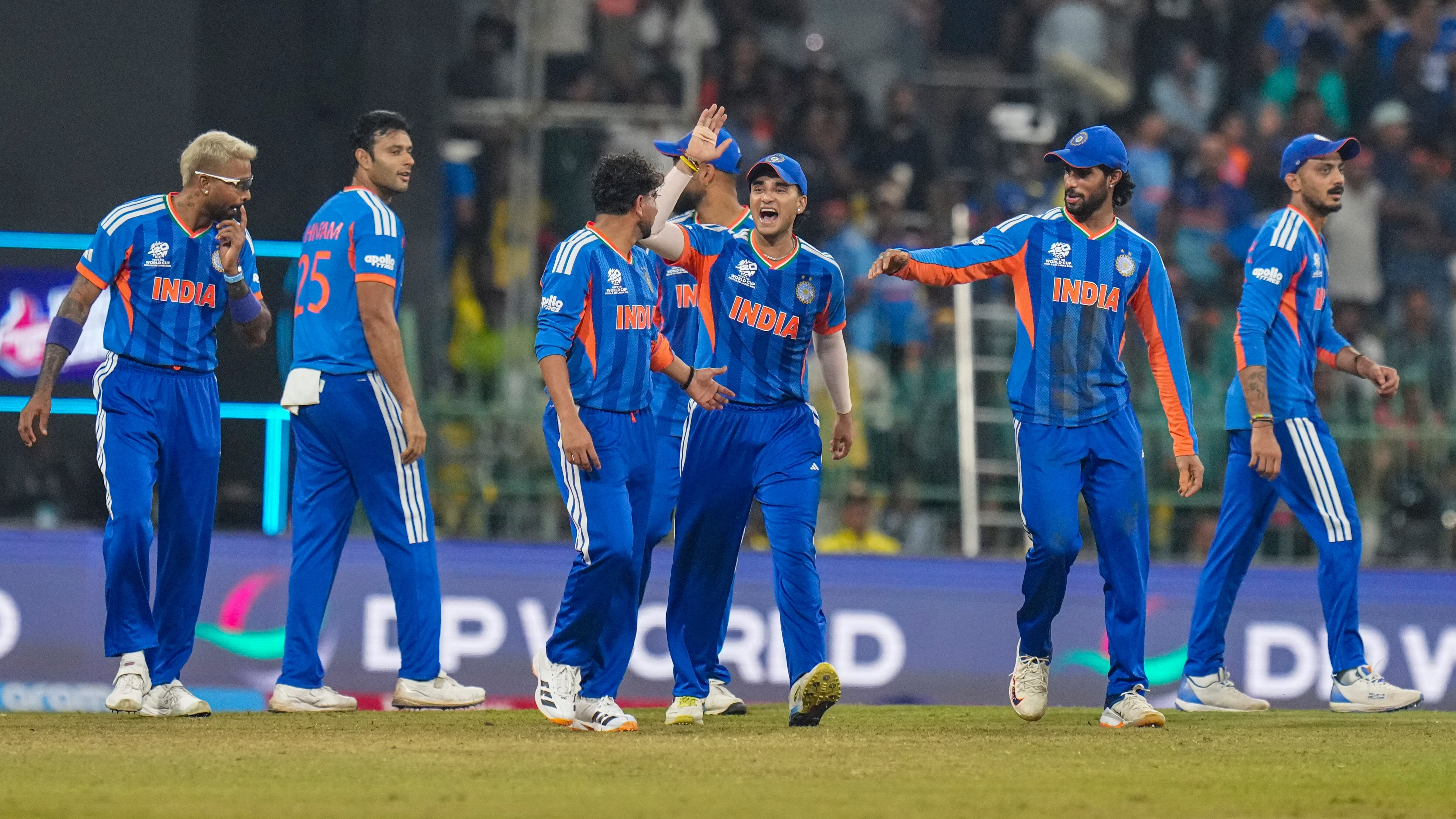
Cricket fans often call it the sport’s fiercest rivalry, but after the latest encounter, many are asking a serious question, is it still a rivalry or has it become predictable? The recent match will be remembered as the India vs Pakistan biggest win in T20 internationals by runs, and it has sparked debate about whether the contest is drifting toward one-sided territory.
Match Overview: A Statement Victory
When Pakistan won the toss and chose to bowl, the decision surprised many analysts. Against a batting-heavy lineup like India, conventional strategy suggested setting a target instead. That early tactical call shaped the narrative of the game.
India posted a strong total and later sealed a commanding 61-run victory, officially recorded as the India vs Pakistan biggest win in T20Is by margin. From powerplay momentum to death-overs execution, India controlled every phase.
Ishan Kishan’s Knock: The Turning Point
The defining moment of the match was the explosive innings from Ishan Kishan, who smashed 77 runs in a high-pressure contest. At one stage, he had scored 77 out of India’s 88 runs, a staggering contribution that effectively decided the game early.
His approach wasn’t reckless hitting but calculated aggression:
- Sweeps and slog sweeps neutralized spin.
- Backfoot play countered variations.
- Selective off-side shots exploited field placements.
This innings alone justified why this match is being labeled the India vs Pakistan biggest win in terms of dominance, not just margin.
Supporting Cast: Collective Brilliance
While Kishan stole headlines, India’s victory was built on teamwork.
- Hardik Pandya delivered crucial breakthroughs.
- Jasprit Bumrah applied relentless pressure with disciplined bowling.
- Middle-order contributions ensured India didn’t collapse after quick wickets.
Every bowler chipped in, ensuring Pakistan never found rhythm. That balanced performance is another reason analysts are calling this result the India vs Pakistan biggest win in terms of all-round superiority.
Pakistan’s Tactical Missteps
For Pakistan, the problems started with strategy and continued with execution. Captain Babar Azam and the batting unit struggled to build partnerships, and the lineup lacked the confidence required to chase a competitive total.
Experts pointed out:
- Questionable toss decision.
- Overreliance on spin without scoreboard pressure.
- Fragile middle order.
When chasing, Pakistan looked as if they were pursuing an unreachable target from the very start.
Rivalry vs Reality
Emotionally, India vs Pakistan remains unmatched. Historical tension, fan passion, and geopolitical background ensure every encounter feels massive. But statistically, recent results suggest a widening gap. The scoreboard narrative is shifting from rivalry to dominance, highlighted again by this India vs Pakistan biggest win.
Rivalries thrive on uncertainty. When one team consistently dictates terms, the psychological balance changes, and that’s what seems to be happening.
Tournament Ripple Effect
The match also impacted the broader competition. Elsewhere in the group, Australia faced a tricky qualification path after an upset loss, prompting squad adjustments including the return of Steve Smith following Mitchell Marsh’s absence.
If Sri Lanka and Zimbabwe secure wins, the points table could tighten dramatically, proving that while one rivalry looked one-sided, the tournament itself remains wide open.
Final Verdict
This wasn’t just a win; it was a statement. The margin, control, and composure all point to one conclusion, this match will be remembered as the India vs Pakistan biggest win of the modern T20 era.
The rivalry may still live in fans’ hearts, but on current form, India hold the upper hand where it matters most: on the field.
Leave a Reply