
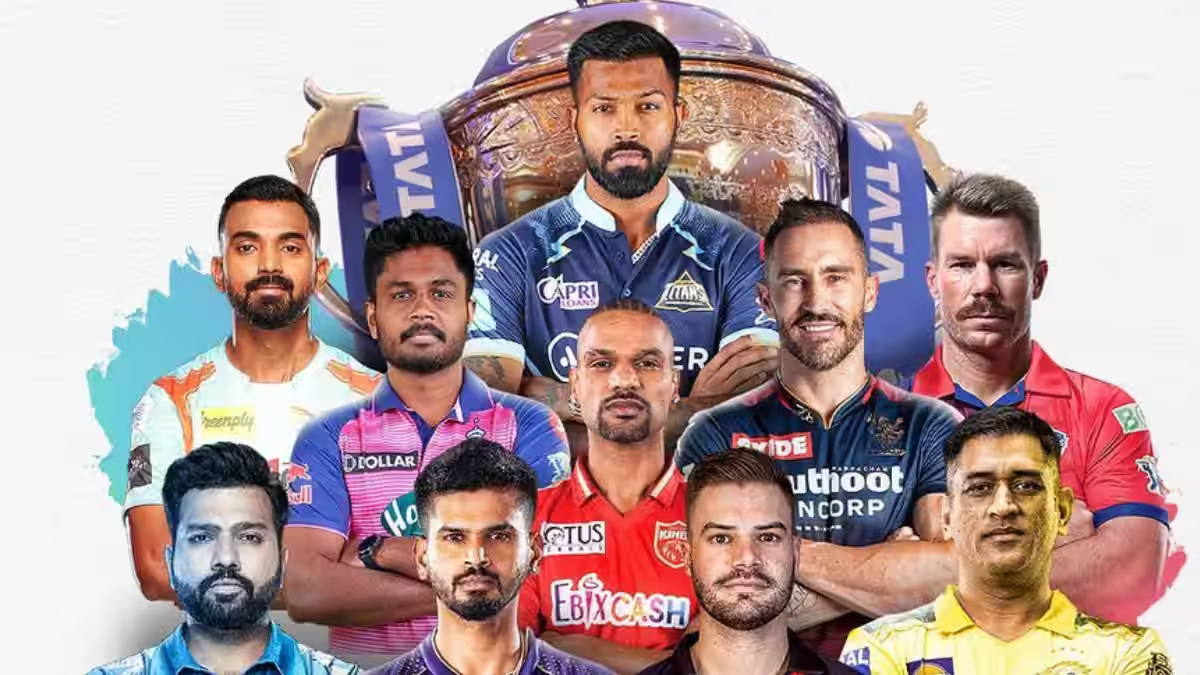
The Indian Premier League has always been a stage for innovation, but in recent seasons, one trend has stood out clearly: IPL captaincy aggression. The shortest format of the game demands quick thinking, bold decisions, and a willingness to take risks, and captains are evolving rapidly to meet these demands.
From unconventional field placements to fearless batting promotions, today’s IPL leaders are no longer playing it safe. Instead, they are pushing boundaries, making aggressive calls, and redefining what leadership looks like in T20 cricket.
The Shift from Traditional to Aggressive Captaincy
In longer formats like Tests and ODIs, captaincy has traditionally been about patience and gradual control. However, T20 cricket flips that approach entirely. With just 20 overs per side, there is little room for conservative thinking.
This is where IPL captaincy aggression comes into play. Captains are now expected to attack from the very first ball—whether it’s by bringing in strike bowlers early, setting attacking fields, or promoting explosive batters up the order.
The IPL, being the most competitive T20 league, has accelerated this shift faster than any other tournament in the world.
What Does Aggressive Captaincy Look Like Today?
Modern IPL captaincy aggression is not just about instinct; it’s a mix of boldness and strategy. Some common traits include:
- Taking risks during the powerplay instead of playing safe
- Rotating bowlers frequently to break partnerships
- Backing young players in high-pressure situations
- Promoting pinch hitters to maintain momentum
Captains are no longer afraid of failure. Instead, they are embracing uncertainty to gain an edge.
Leaders Driving the Aggressive Approach
Several modern captains have embodied this fearless style of leadership.
Hardik Pandya has been one of the biggest examples of aggressive captaincy. His willingness to shuffle batting orders and trust young players has paid off in crucial moments.
Rohit Sharma, while known for his calm demeanor, often makes sharp, attacking decisions—especially with field placements and bowling changes.
Then there is MS Dhoni, who may appear calm on the surface but has consistently taken bold calls under pressure, proving that aggression doesn’t always have to be loud.
These leaders highlight that IPL captaincy aggression comes in different forms, but the intent remains the same: to stay ahead of the game.
Data and Trends Supporting the Change
The numbers reflect this transformation clearly. Teams are now:
- Taking more wickets in the powerplay due to attacking fields
- Attempting higher run chases instead of settling for safe totals
- Using more bowlers in a single innings to maintain unpredictability
All of these points toward one thing: IPL captaincy aggression is no longer optional; it’s essential.
Impact on Team Strategy
Aggressive captaincy has also reshaped how teams are built. Flexibility has become more important than ever.
- All-rounders are now key assets
- Batters are expected to adapt to multiple roles
- Bowlers must be ready for unconventional usage
Data analytics has further strengthened IPL captaincy aggression, giving captains insights that allow them to take calculated risks rather than blind gambles.
The Risks of Being Too Aggressive
While aggression brings excitement, it also comes with its own set of challenges.
- Over-aggression can lead to poor decisions under pressure
- Constant changes may disrupt team stability
- Young players might struggle with the expectations
There have been matches where aggressive calls have backfired, reminding everyone that balance is still crucial.
Why Fans Love This New Era
For fans, IPL captaincy aggression has made the game more thrilling than ever. Close finishes, unexpected decisions, and high-scoring matches have become the norm.
In a league built on entertainment, aggressive captaincy adds an extra layer of excitement, making every match unpredictable and engaging.
The Future of Captaincy in IPL
Looking ahead, aggressive captaincy is likely to become the standard rather than the exception. With younger players stepping into leadership roles and technology playing a bigger part in decision-making, the game will only get faster and more dynamic.
The next generation of captains will grow up in an environment where IPL captaincy aggression is the default mindset.
Conclusion
The evolution of captaincy in the IPL reflects the changing nature of T20 cricket itself. Leaders are no longer just strategists, they are risk-takers, innovators, and game-changers.
IPL captaincy aggression is redefining leadership, pushing captains to think faster, act bolder, and embrace uncertainty. While the approach comes with risks, it is this very aggression that is shaping the future of the game.
In the T20 era, playing safe is no longer enough. To win, captains must dare to be aggressive, and that is exactly what we are witnessing in today’s IPL.
Leave a Reply