
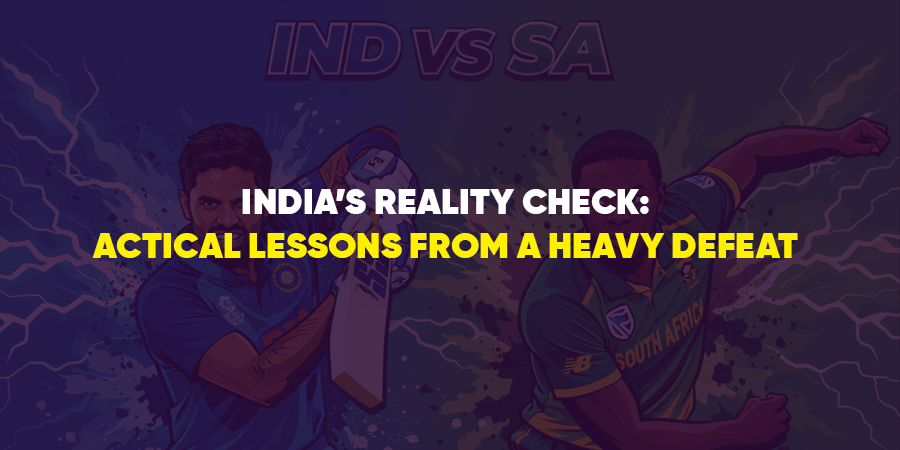
The latest clash between the India national cricket team and the South Africa national cricket team turned into a wake-up call for fans and analysts alike. This India vs South Africa match analysis dives deep into what went wrong, why the batting collapsed, and what the result means going forward.
Match Snapshot: A Game That Slipped Early
South Africa posted a challenging total and immediately put India under pressure with disciplined bowling. From the very first overs, wickets fell in quick succession, leaving India chasing the game rather than controlling it. This analysis shows that the contest was effectively decided during the powerplay phase, when early dismissals destroyed momentum.
The Turning Point: Powerplay Collapse
Modern T20 cricket demands strong starts, but India’s top order faltered. The early dismissals meant middle-order batters had to rebuild rather than accelerate. Against a quality attack, that shift in approach proved costly. As this India vs South Africa match analysis highlights, losing multiple wickets inside six overs created a run-rate equation that was nearly impossible to recover from.
Captain’s Verdict: Honest Assessment From Suryakumar Yadav
After the match, Suryakumar openly admitted that the batting unit failed to deliver. He pointed out that frequent wickets prevented partnerships from forming and acknowledged that chasing a big total requires stability at the top. His candid reaction reflected both accountability and confidence that the team can bounce back.
Under the Scanner: Tilak Varma & Abhishek Sharma
Young talents Tilak Varma and Abhishek Sharma faced scrutiny following the defeat. Both are considered future stars, but this game exposed the challenge of performing under pressure against elite bowling. Any match analysis would note that their dismissals came at crucial moments when India needed stability rather than risk-taking.
What South Africa Did Right
Credit must go to South Africa’s tactical execution:
- Tight line and length early on
- Smart field placements to create pressure
- Variation in pace to force mistakes
Their bowlers didn’t just take wickets, they dictated the tempo. This India vs South Africa match analysis shows that controlling rhythm is often more decisive than sheer scoring rate.
Key Tactical Lessons for India
- Stability in the Top Order – Early wickets remain India’s biggest vulnerability.
- Situational Awareness – Batters must adapt their approach depending on match context.
- Partnership Building – Even in T20s, partnerships remain the backbone of successful chases.
Bigger Picture: Impact on Tournament Momentum
Losses like this don’t just affect points; they influence confidence, net run rate, and dressing-room morale. However, strong teams often use defeats as learning platforms. This India vs South Africa match analysis suggests the result could serve as a tactical reset rather than a long-term setback.
Conclusion: A Defeat That Could Strengthen India
While the margin of defeat raised concerns, it also provided clarity. The flaws are visible, the lessons are obvious, and the path to improvement is clear. If India corrects its powerplay approach and strengthens middle-order resilience, this loss may ultimately prove valuable.
In the end, the real takeaway from this India vs South Africa match analysis is simple: setbacks expose weaknesses, but they also reveal exactly how to fix them.


Leave a Reply