
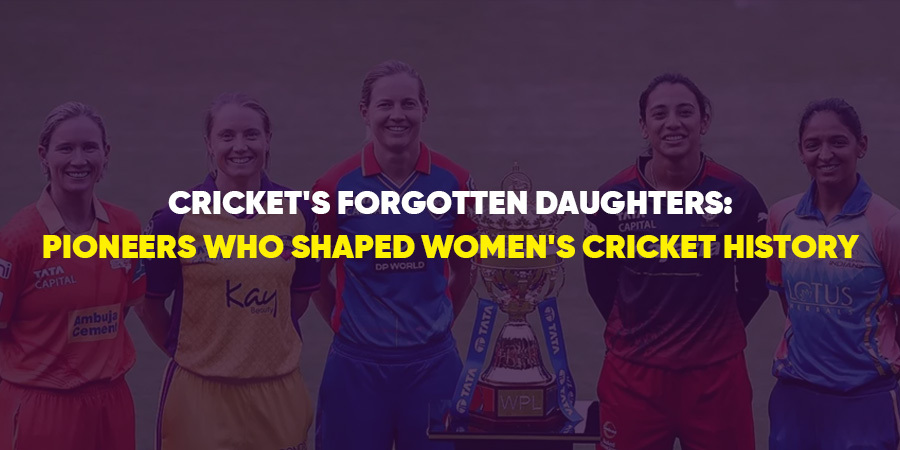
Women’s cricket history isn’t just about today’s packed stadiums and WPL fireworks, it’s about thinking long-term. Just like smart investors don’t bet everything on one star, the growth of the game rests on trailblazers who built foundations decades ago. This is where cricket’s forgotten daughters come in. By battling biases, poor facilities, and zero spotlight, these pioneers diversified the sport’s roots, paving the way for modern heroes on platforms like the BCCI and global leagues.
1. Women’s Cricket History as a Hidden Legacy
In simple terms, women’s cricket history means tracing multiple untold stories the way you would track investments over time. Instead of focusing only on recent T20 stars, we spread the narrative across eras, from village greens to World Cups. This approach protects the full picture from fading memories, last-minute media shifts, or overlooked contributors, ensuring the game’s true evolution shines through.
2. Why Honouring Forgotten Pioneers Matters
Women’s cricket history involves endless variables, societal norms, funding droughts, pitch battles, and even cultural taboos. If we only celebrate current icons, one overlooked chapter can erase entire legacies. Recognizing these daughters ensures stability, keeps their inspiration alive, and opens doors for more young talents, especially in tier-2 cities where grassroots dreams brew.
3. Key Trailblazers to Spotlight in Your Portfolio
One of the best ways to dive into women’s cricket history is through player spotlights. Instead of the same familiar names, rotate focus to unsung gems. Rachael Heyhoe Flint organized the 1973 Women’s World Cup, beating the men’s event by two years, and captained England to glory.
Diana Edulji from India took 34 Test wickets with slow left-arm spin, becoming the first Indian woman in 20 Tests despite no sponsorships. Enid Bakewell delivered all-round magic with 1078 Test runs and 50 wickets in just 12 games. Shantha Rangaswamy captained India in the 1982 World Cup, scoring 404 runs to build the nation’s base.
These picks mix proven grit with high-impact differentials who changed the game quietly.
4. Balancing Struggles and Milestones
Every strong dive into women’s cricket history needs balance. Safe milestones like the 1745 Bramley-Hambledon match or the 1926 Women’s Cricket Association form the core. Alongside them, slot in risky breakthroughs: women playing at Lord’s in 1976 or India’s 2025 domestic boom after ODI wins.
Vary your timeline across eras too. Mix early Tests from 1934-35 between England and Australia with modern highs like Belinda Clark’s 229* ODI record. Enter different formats, Tests, ODIs, T20s, for a well-rounded view, reducing dependency on one period.
5. Common Oversights to Dodge
Over-focusing on men’s cricket is a trap that dilutes women’s cricket history. Copy-pasting star bios without context weakens the narrative. Ignoring Indian angles, like 1976 Patna’s tiny crowds or Mithali Raj’s endurance, hurts the desi connection too.
6. How Modern Stars Build on This Legacy
Platforms like Instagram Reels and YouTube make sharing women’s cricket history seamless, letting you spotlight differentials via skits or Hinglish voiceovers. With BCCI’s push, experiment with youth stories from regions beyond metros, spread entries across local heroes for broader impact, just like contest diversification.
Winning in women’s cricket history isn’t about spotlight luck, it’s about strategy and respect. By treating pioneers like portfolio anchors and weaving their tales into Reels, you fuel long-term fandom. Think smart, diversify the narrative, and let these forgotten daughters swing eternal.
Leave a Reply