
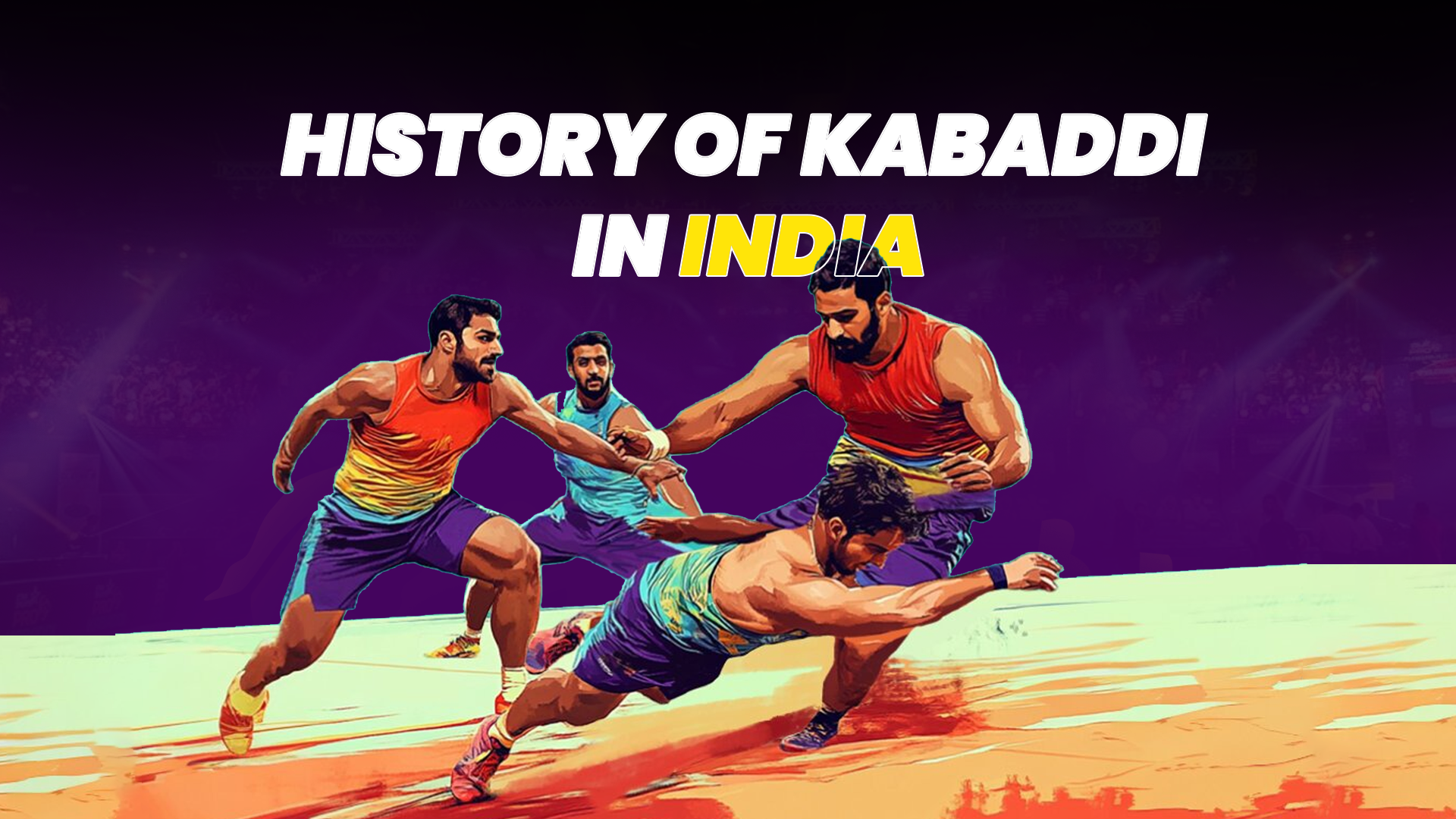
Kabaddi is a symbol of the India’s cultural pride, resilience, and tradition. Beginning from village courtyards to becoming a sport watched by millions on television, kabaddi has traveled an extraordinary journey. Let’s explore the history of Kabaddi in India and how this indigenous game grew into a national and global phenomenon.
The Ancient Origins
Kabaddi’s history dates back thousands of years. Many historians believe it originated over 4,000 years ago in ancient India. References in Indian epics such as the Mahabharata draw similarities between Abhimanyu’s strategy in the Chakravyuh formation and a kabaddi raid.
In its earliest form, kabaddi was played barefoot on open land with no equipment, relying solely on stamina, agility, and quick thinking. It was more than entertainment; it was a way to build fitness and self-defense skills in rural communities.
Kabaddi in Rural Life & Culture
For centuries, young men were encouraged to play as it toughened the body and sharpened reflexes. Kabaddi was often played during festivals and fairs, drawing large crowds who would cheer for their village’s team.
The game became a symbol of unity, showcasing both individual courage and collective strategy. In some regions, kabaddi even served as a form of training for warriors, preparing them for physical endurance and mental alertness.
The Road to Modern Kabaddi
The history of kabaddi started to change in the early 20th century. In 1921, formal rules were drafted in Maharashtra, giving the game a framework beyond its traditional roots. By 1936, kabaddi had gained international attention when it was showcased at the Berlin Olympics as a demonstration sport.
In 1950, the All India Kabaddi Federation was formed, and just two years later, the first national championship was organized, firmly placing kabaddi on India’s sporting map.
Kabaddi Goes Global
India continued to promote kabaddi on the world stage, and in 1990 the sport was officially included in the Asian Games held in Beijing. True to its dominance, India clinched the gold medal and went on to repeat that success for several years. The Kabaddi World Cup, launched in 2004, further expanded its global appeal, with nations like Iran, South Korea, and Bangladesh emerging as serious competitors.
The Pro Kabaddi League Revolution
The history of kabaddi changed in 2014 with the launch of the Pro Kabaddi League (PKL). The league gave kabaddi a professional makeover. PKL is city-based franchises, live television coverage, celebrity endorsements, and glamorous presentation brought the rural sport to urban living rooms.
Players became household names, sponsorships flowed in, and kabaddi transformed into a mainstream sport with massive fan following. PKL not only popularized the game in India but also inspired interest abroad.
Today, kabaddi stands as one of India’s most beloved sports. From rural mud courts to world-class arenas, it has preserved its essence while embracing modernity.
Leave a Reply