
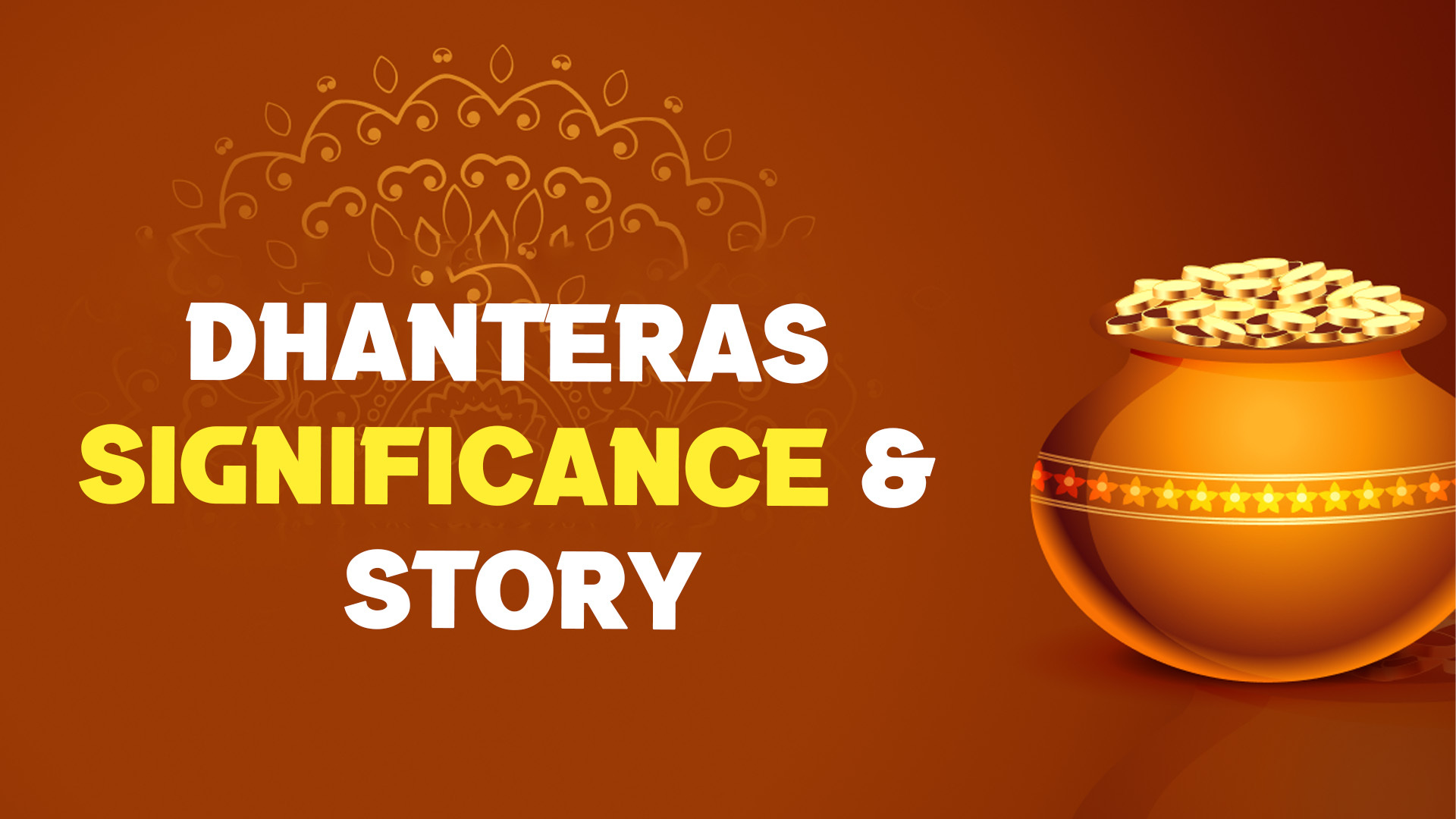
As the festive season lights up homes across India, Dhanteras marks the grand beginning of Diwali. But before diyas are lit and sweets are shared, this day sets the tone for prosperity, health, and new beginnings.
Every year, families across the country rush to buy gold, silver, and utensils, believing that these purchases invite the blessings of Goddess Lakshmi.
The Meaning of Dhanteras
The word Dhanteras comes from two Sanskrit words, Dhan meaning wealth, and Teras referring to the thirteenth day (Trayodashi) of the lunar fortnight.
It is believed that worshipping Goddess Lakshmi on this day brings wealth and prosperity into one’s home, while lighting diyas wards off negative energies.
The Story of King Hima & the Clever Princess
One of the most popular legends behind Dhanteras is the story of Prince Hima, who was destined to die on the fourth day of his marriage due to a snake bite.
However, his clever wife devised a plan. She laid out all her gold ornaments and silver coins at the entrance of their chamber and lit hundreds of diyas around the room. Meanwhile, she kept her husband awake all night by narrating stories and singing songs.
When Yama arrived in the form of a serpent, the brilliance of the gold and the flickering lamps blinded him. The music and devotion of the princess distracted him, and he quietly left the palace the next morning, sparing the prince’s life.
This story gave rise to the tradition of lighting lamps and buying gold on Dhanteras.
The Connection with Lord Dhanvantari
Another important reason Dhanteras is celebrated is its association with Lord Dhanvantari, the divine incarnation of Lord Vishnu.
According to Hindu mythology, during the Samudra Manthan, Dhanvantari emerged from the ocean holding a pot of Amrit.
This is why Dhanteras is also known as Dhanvantari Jayanti, a day dedicated to good health and wellness. In many homes, people pray not just for wealth but also for longevity and physical well-being.
Modern-Day Traditions & Beliefs
While the ancient stories give Dhanteras its spiritual depth, the modern-day celebration beautifully blends faith with festivity. People clean their homes, decorate entrances with rangolis, and light diyas to welcome Goddess Lakshmi.
Buying gold, silver, or new utensils has become symbolic.Businesses open new ledgers, people invest in property or jewelry, and homes glow with positivity and anticipation of Diwali.

Leave a Reply