
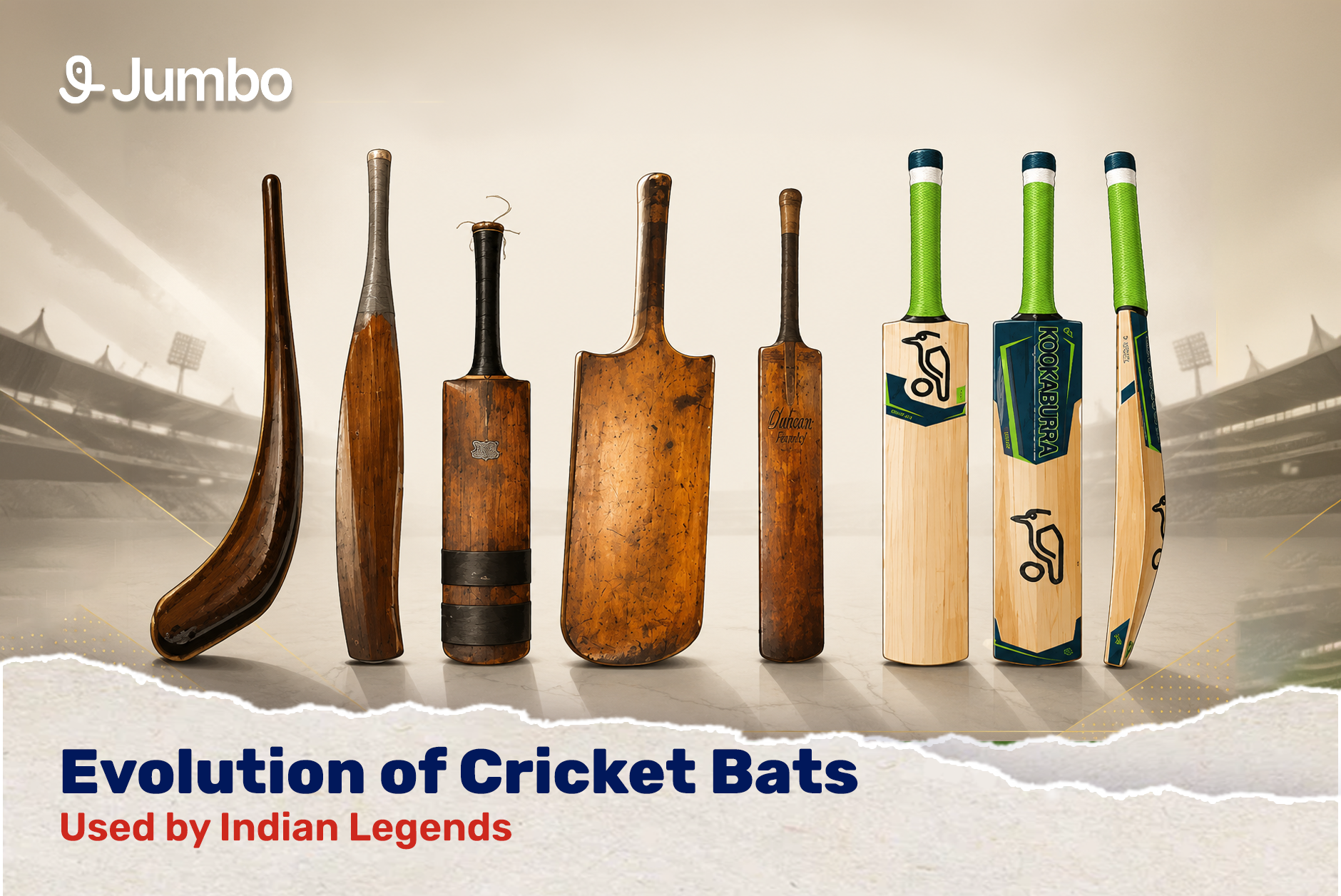
Cricket equipment has undergone remarkable changes over the years, and perhaps no piece of gear has evolved more dramatically than the cricket bat. From the lightweight willow bats used by earlier generations to the powerful modern designs seen today, cricket bats have played a significant role in shaping batting styles and records. Indian cricket legends have used a variety of bat designs throughout different eras, reflecting both technological advancements and changes in the game itself.
The Early Days of Indian Cricket
In the early decades of Indian cricket, bats were generally slimmer, lighter, and featured smaller sweet spots compared to modern equipment. Players relied heavily on timing, technique, and placement rather than power hitting.
Legendary Indian batsmen from the 1960s and 1970s often used traditional English willow bats that prioritised control over explosive stroke play. During this era, cricket was largely dominated by Test matches, making patience and precision more valuable than aggressive batting.
The Sunil Gavaskar Era
Sunil Gavaskar represented a generation where technique was considered the ultimate batting weapon.
The bats used during Gavaskar’s career were significantly narrower and lighter than today’s models. These bats encouraged straight drives, defensive shots, and careful shot selection. Facing some of the world’s fastest bowlers without modern protective equipment, batsmen depended on skill rather than oversized bat profiles.
Gavaskar’s success demonstrated that mastery of fundamentals could overcome even the toughest bowling attacks.
The Sachin Tendulkar Revolution
The arrival of Sachin Tendulkar coincided with major advancements in bat manufacturing.
Bat makers began experimenting with thicker edges, larger sweet spots, and improved weight distribution. Tendulkar famously worked closely with bat manufacturers to customise equipment according to his preferences.
His bats combined balance and power, allowing him to play both classical cricket shots and aggressive attacking strokes. As one-day cricket became increasingly popular, bat technology evolved to support a more dynamic batting approach.
The Rise of Power Cricket
The late 1990s and early 2000s witnessed significant changes in cricket. Limited-overs cricket became more aggressive, encouraging batsmen to hit boundaries more frequently.
Players such as Virender Sehwag embraced powerful batting styles that benefited from modern bat designs. Manufacturers responded by producing bats with thicker edges and enhanced sweet spots while still complying with cricket regulations.
This period marked the beginning of cricket’s power-hitting era.
T20 Cricket and Modern Bat Innovation
The introduction of T20 cricket accelerated bat development even further. Players needed equipment capable of generating maximum power while maintaining control.
Modern Indian stars such as Virat Kohli, Rohit Sharma, and KL Rahul use highly engineered bats designed for contemporary cricket.
Today’s bats feature:
- Larger sweet spots
- Thick edges
- Improved balance
- Lightweight pickup
- Enhanced power generation
- Customised handles for comfort
These innovations help players adapt to all formats of the game.
The Role of English Willow
Despite technological advancements, English willow remains the preferred material for professional cricket bats.
High-quality willow provides the perfect combination of durability, flexibility, and stroke-making ability. Most Indian cricket legends have trusted premium-grade English willow bats throughout their careers.
Manufacturers continue to refine production techniques while preserving the traditional qualities that make willow the gold standard in cricket.
How Bat Evolution Changed Indian Cricket
The evolution of cricket bats has influenced batting strategies significantly. Modern players can play innovative shots, score faster, and clear boundaries more consistently than previous generations.
However, successful batsmen still rely on timing, footwork, and technique. While equipment has improved, the fundamentals of batting remain unchanged.
The evolution of cricket bats mirrors the evolution of cricket itself. From the classic bats used by Sunil Gavaskar to the advanced equipment preferred by Virat Kohli and Rohit Sharma, each era reflects changing styles of play. As technology continues to improve, cricket bats will likely become even more refined, helping future generations of Indian cricketers push the boundaries of batting excellence.
Leave a Reply