
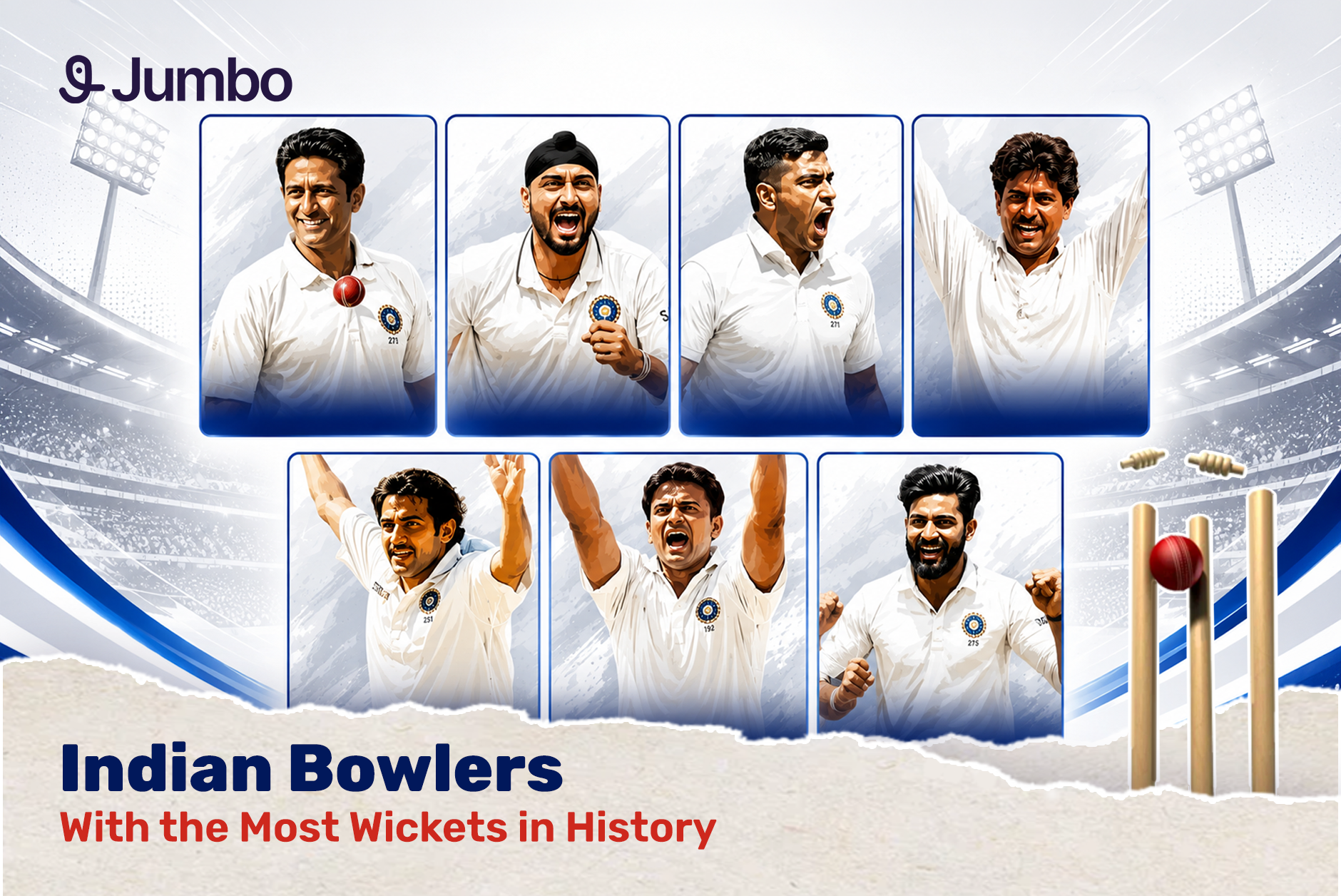
Indian cricket has produced some of the finest bowlers the sport has ever seen. While India was traditionally known for its batting strength, generations of exceptional bowlers have played a crucial role in the team’s success across formats. From legendary spinners to world-class fast bowlers, Indian bowlers have consistently delivered match-winning performances and created unforgettable moments.
Let’s look at some of the Indian bowlers with the most wickets in history and their contributions to Indian cricket.
Why Wickets Matter in Cricket
Taking wickets is one of the most important aspects of cricket. A bowler who consistently dismisses batsmen can change the course of a match and create opportunities for victory.
The greatest bowlers are remembered not only for their wicket tallies but also for their ability to perform under pressure and deliver when the team needs them most.
Anil Kumble – India’s Greatest Wicket-Taker
Anil Kumble stands among the most successful bowlers in cricket history.
Known for his accuracy, discipline, and determination, Kumble became India’s highest wicket-taker in Test cricket. His ability to outthink batsmen and bowl long spells made him one of the most respected spin bowlers in the world.
One of the defining moments of his career came when he took all ten wickets in a Test innings against Pakistan, a feat achieved by only a handful of bowlers in cricket history.
Ravichandran Ashwin – Modern Spin Maestro
Ravichandran Ashwin has established himself as one of India’s most successful modern bowlers.
Combining intelligence, variation, and technical skill, Ashwin has consistently troubled batsmen across the world. His ability to adapt to different conditions has helped him become one of the leading wicket-takers in international cricket.
Ashwin’s achievements place him among the greatest spin bowlers India has ever produced.
Harbhajan Singh – The Turbanator
Harbhajan Singh played a vital role in Indian cricket for more than a decade.
Known for his fighting spirit and aggressive approach, Harbhajan delivered several memorable performances, particularly against strong international teams. His success in both Test and limited-overs cricket earned him a place among India’s highest wicket-takers.
Kapil Dev – Legendary All-Rounder
Before the rise of India’s modern pace attack, Kapil Dev carried the responsibility of leading the bowling unit.
The World Cup-winning captain became one of the most successful fast bowlers in cricket history. His wicket-taking ability, combined with valuable contributions with the bat, made him one of India’s greatest all-rounders.
Zaheer Khan – Leader of India’s Pace Revolution
Zaheer Khan played a key role in transforming India’s fast-bowling culture.
His ability to swing the ball, bowl intelligently, and perform on overseas tours helped India compete successfully in all conditions. Zaheer became one of India’s leading wicket-takers and mentored the next generation of fast bowlers.
Jasprit Bumrah – Modern-Day Pace Superstar
Jasprit Bumrah has emerged as one of the world’s premier fast bowlers.
Known for his unique action, deadly yorkers, and exceptional consistency, Bumrah continues to add to his wicket tally across formats. He represents the evolution of Indian fast bowling on the global stage.
The Legacy of Indian Bowling
Indian cricket’s bowling legacy extends beyond individual records. These bowlers have inspired generations of young cricketers and helped establish India as a complete cricketing nation capable of winning in any conditions.
From spin legends to fast-bowling pioneers, each generation has contributed to India’s success.
The Indian bowlers with the most wickets in history have played a crucial role in shaping the country’s cricketing achievements. Legends such as Anil Kumble, Ravichandran Ashwin, Harbhajan Singh, Kapil Dev, Zaheer Khan, and Jasprit Bumrah have demonstrated excellence, resilience, and consistency throughout their careers. Their remarkable achievements continue to inspire cricket fans and aspiring bowlers across India, ensuring their place in the rich history of Indian cricket.
Leave a Reply