
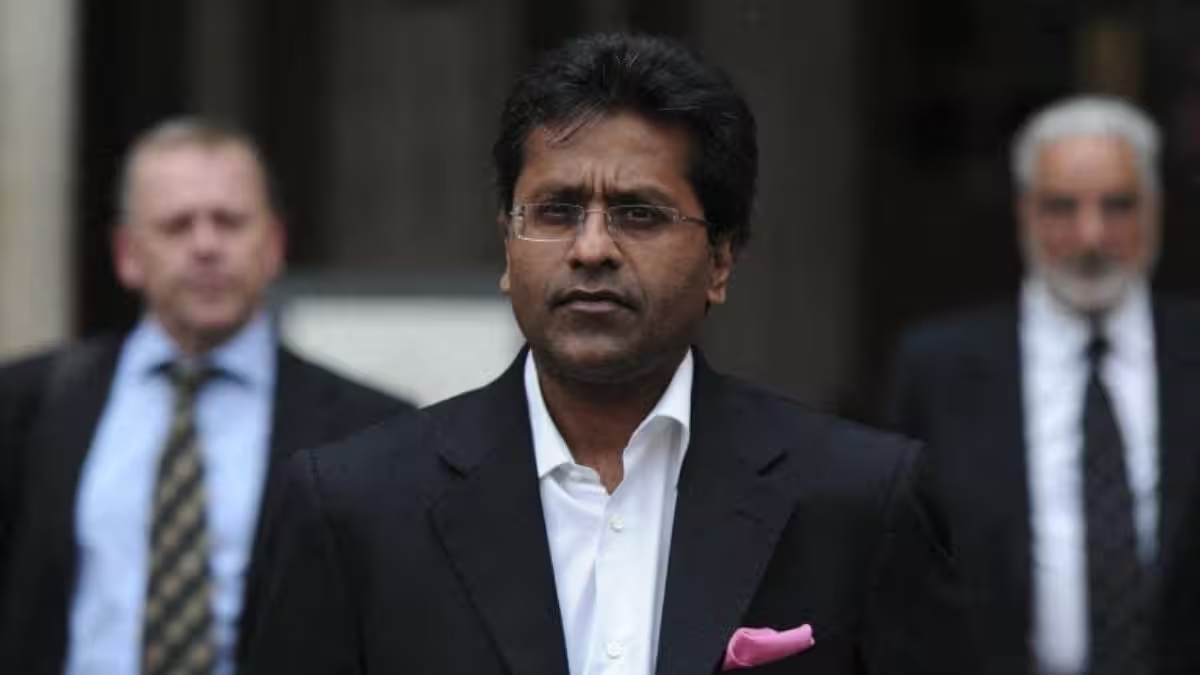
The Indian Premier League continues to dominate the global T20 scene, but a fresh controversy has taken center stage after Lalit Modi made a bold claim about the league’s financial structure. He believes the tournament loses a massive amount every year because of its current format. At the heart of this debate is the Lalit Modi IPL revenue loss 2400 crore claim, which raises serious questions about how the Board of Control for Cricket in India manages the league.
What Did Lalit Modi Say?
Lalit Modi, who founded the Indian Premier League, directly criticized the BCCI for not maximizing revenue potential. He stated that the IPL misses out on nearly ₹2400 crore every year because it does not follow a full-fledged format.
The Lalit Modi IPL revenue loss 2400 crore argument focuses on how the current structure limits the league’s earning capacity. He insists that the IPL has moved away from its original vision.
The Format Problem: Where IPL Loses Money
The biggest issue, according to Modi, lies in the format. The IPL originally followed a home-and-away structure where each team played every other team twice.
Now, even with 10 teams, the league runs only 74 matches in a season instead of expanding to a complete round-robin format. This decision directly reduces the number of games and cuts down revenue opportunities.
This gap strengthens the Lalit Modi IPL revenue loss 2400 crore claim, as fewer matches mean lower earnings from multiple streams.
Down the ₹2400 Crore Calculation
IPL media rights generate huge money per match. Every additional game adds significant value through broadcasting, sponsorships, and advertisements.
Lalit Modi argues that increasing the number of matches can unlock thousands of crores in extra revenue. The Lalit Modi IPL revenue loss 2400 crore figure comes from estimating the income lost due to these missing games.
Since the league shares revenue between the BCCI and franchises, both sides feel the impact of this shortfall.
Impact on IPL Franchises
Franchises also lose out when the league schedules fewer matches. More games would mean more ticket sales, higher sponsorship visibility, and stronger brand growth.
Modi believes each team misses a big financial opportunity every season. This further supports the Lalit Modi IPL revenue loss 2400 crore argument, as the loss spreads across the entire ecosystem.
Lalit Modi vs BCCI: A Bigger Debate
This issue goes beyond just numbers. Lalit Modi views the IPL as a global sports product that should maximize both revenue and fan engagement.
He questions why the BCCI has not adopted a full home-and-away format after expanding the league. The Lalit Modi IPL revenue loss 2400 crore debate reflects a deeper difference in vision for the IPL’s future.
Why BCCI Might Be Holding Back
The BCCI also faces real challenges while planning the IPL schedule. It has to manage player workload, avoid clashes with international cricket, and handle logistics across venues.
The board may prioritize long-term sustainability over short-term revenue gains, even if it limits earning potential.
What This Means for IPL’s Future
The discussion could influence how the IPL evolves in the coming years. If the league increases the number of matches, it can boost revenue significantly.
However, that move will also bring challenges related to scheduling, player fitness, and overall tournament quality.
Conclusion
The IPL remains one of the biggest sporting leagues in the world, but debates like this show that there is still room for improvement. Lalit Modi has sparked an important conversation about the league’s structure and financial strategy.
The BCCI now faces a key decision, whether to expand the format and maximize revenue or maintain the current balance for sustainability. Either way, the future of the IPL will depend on how it handles this debate.
Leave a Reply